The Judge Behind a Television Inspiration
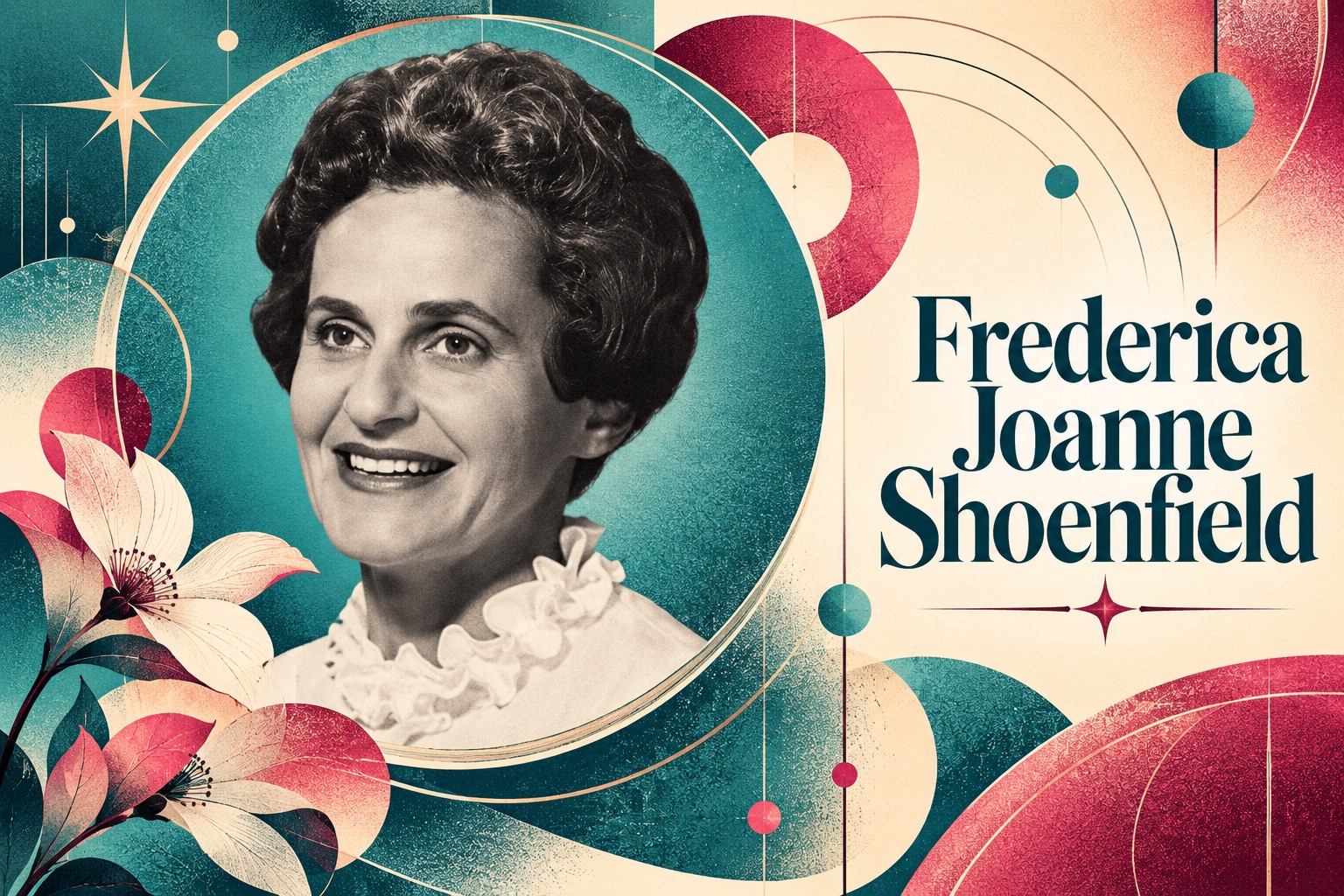
Frederica Joanne Shoenfield became widely known as Frederica Brenneman, a Connecticut judge whose work focused on children and families. She was also the mother of actor and producer Amy Brenneman, whose television series Judging Amy drew inspiration from her mother’s professional life. I find the real judicial career more compelling than the simple celebrity connection. It involved decades of decisions affecting vulnerable children.
Born on July 10, 1926, in Ann Arbor, Michigan, Frederica was the daughter of Allen Shoenfield and Kate Friedman Shoenfield. Allen worked as a science reporter for the Detroit News. Her early family background placed journalism and intellectual work near the beginning of a life that would eventually take shape in the law.
Shoenfield is her birth surname. Brenneman is the married name under which much of her legal work is remembered. Freddie was another name used for her. These variations describe one person, not several similarly named judges.
Radcliffe and a Newly Opened Door
Frederica attended Radcliffe College before entering Harvard Law School in 1950. She belonged to the school’s first class that admitted women. That date gives her education a significance beyond the credential itself: she entered at a point when access to that institution was changing.
I think of her place in that class as a door opening into a demanding room. Admission was a beginning. Studying, completing the course, and building a legal career still lay ahead. Her graduation in 1953 marks the completion of that stage rather than a symbolic appearance at the threshold.
She met Russell Langdon Brenneman Jr. at Harvard Law School. They married in 1951 and are remembered as the first married couple to graduate from the school. Their shared education connected their personal lives with two distinct legal careers.
Russell became an environmental lawyer. Frederica’s work centered increasingly on juvenile matters. They shared a profession in the broad sense while directing their expertise toward different public needs.
Connecticut’s Juvenile Court
Frederica was appointed to Connecticut’s juvenile bench in the late 1960s, becoming one of the state’s earliest female judges. Her appointment came during a period of expanding attention to children’s rights within legal proceedings. Her work included abuse, neglect, and placement matters, where court decisions could determine the structure of a child’s daily life.
Juvenile cases involve people whose futures can be affected by judgments about safety, care, and family circumstances. The judge’s task is consequential even when proceedings do not produce public drama.
In 1978, Connecticut’s juvenile court merged into the Superior Court. Frederica then served as a Superior Court judge while continuing her concentration on children and families. That institutional change matters because it explains the two court titles associated with her career.
Her influence extended beyond hearing individual cases. She trained judges and caseworkers and helped shape juvenile practice in Connecticut. Teaching colleagues allowed professional knowledge to move beyond one courtroom and into the broader system.
Children in Placement
In 1979, Frederica helped found Children in Placement, an organization concerned with monitoring and supporting children in foster care. The initiative brought her interest in child welfare into a form outside the bench itself.
I see a clear connection between that work and her judicial responsibilities. A placement decision is not the end of a child’s experience. What happens afterward also matters. An organization focused on children in placement addresses that continuing dimension, where oversight and attention remain necessary after formal proceedings.
Her professional recognition included honors from legal and educational organizations. Those awards reflect a career identified with juvenile justice rather than with a single prominent trial. The accumulated work is the important measure: cases, training, organizational participation, and sustained advocacy across years.
Her public biography is therefore more than a story of being first or nearly first. Breaking a barrier explains how she entered a position. The work with children explains what she did after arriving.
Russell and Their Three Children
Frederica and Russell had three children: Matthew, Andrew, and Amy Brenneman. Their marriage lasted sixty-five years, until Russell’s death. That long partnership belongs beside their individual professional histories, without requiring the assumption that they practiced the same kind of law.
Amy’s entertainment career became the most publicly visible branch of the next generation. She married director Brad Silberling, and their children are Charlotte Tucker Silberling and Bodhi Russell Silberling. Frederica’s other named grandchildren include Granger Brenneman, Ava Brenneman, and Charles Brenneman.
I prefer to introduce Matthew and Andrew simply as her sons rather than invent elaborate careers or personalities from a short family record. Their place in the family is established even when their lives have received less public attention than Amy’s.
Frederica and Russell also became associated with philanthropic support at Radcliffe through the Frederica and Russell Brenneman Dean’s Leadership Fund. The gift connects their educational beginnings with a later family legacy of support for the institution.
Judging Amy and the Real Work Behind Fiction
Judging Amy aired from 1999 to 2005. Amy Brenneman co-created the series, and its judicial premise drew on her mother’s career. Frederica also served as an advisor, reading scripts and helping the writers with legal detail.
I find that advisory role especially important. She was an inspiration for the series, but she also contributed professional knowledge to its making. The real judge and the fictional character remained distinct. Television can reshape events and relationships to serve a story; Frederica’s career should not be reconstructed from episodes.
Her involvement offered a bridge between legal practice and an audience that might never enter a juvenile courtroom. The series brought attention to family and child welfare issues through drama, while her advice helped give the fictional proceedings a grounding in professional experience.
Frederica died in Woodland Hills, California, on March 15, 2021, at 94. The long span of her life included an institutional barrier opening in 1950, decades of judicial service, and a later cultural portrayal influenced by that work.
FAQ
Was Frederica Joanne Shoenfield also known as Frederica Brenneman?
Yes. Shoenfield was her birth surname, and Brenneman was her married name. She is the Connecticut judge and juvenile justice advocate remembered as Frederica Brenneman, and the mother of Amy Brenneman.
Why is her Harvard Law education significant?
She entered Harvard Law School in 1950 as part of its first class admitting women and graduated in 1953. She and Russell Brenneman married while studying there and became the first married couple to graduate from the school.
How did she contribute to Judging Amy?
Her judicial career inspired the series’ premise, and she served as a legal advisor who reviewed scripts. Her daughter Amy co-created and starred in the show. Frederica’s actual career remained separate from the fictional character and storylines.