Jamaica and a new home in Manhattan
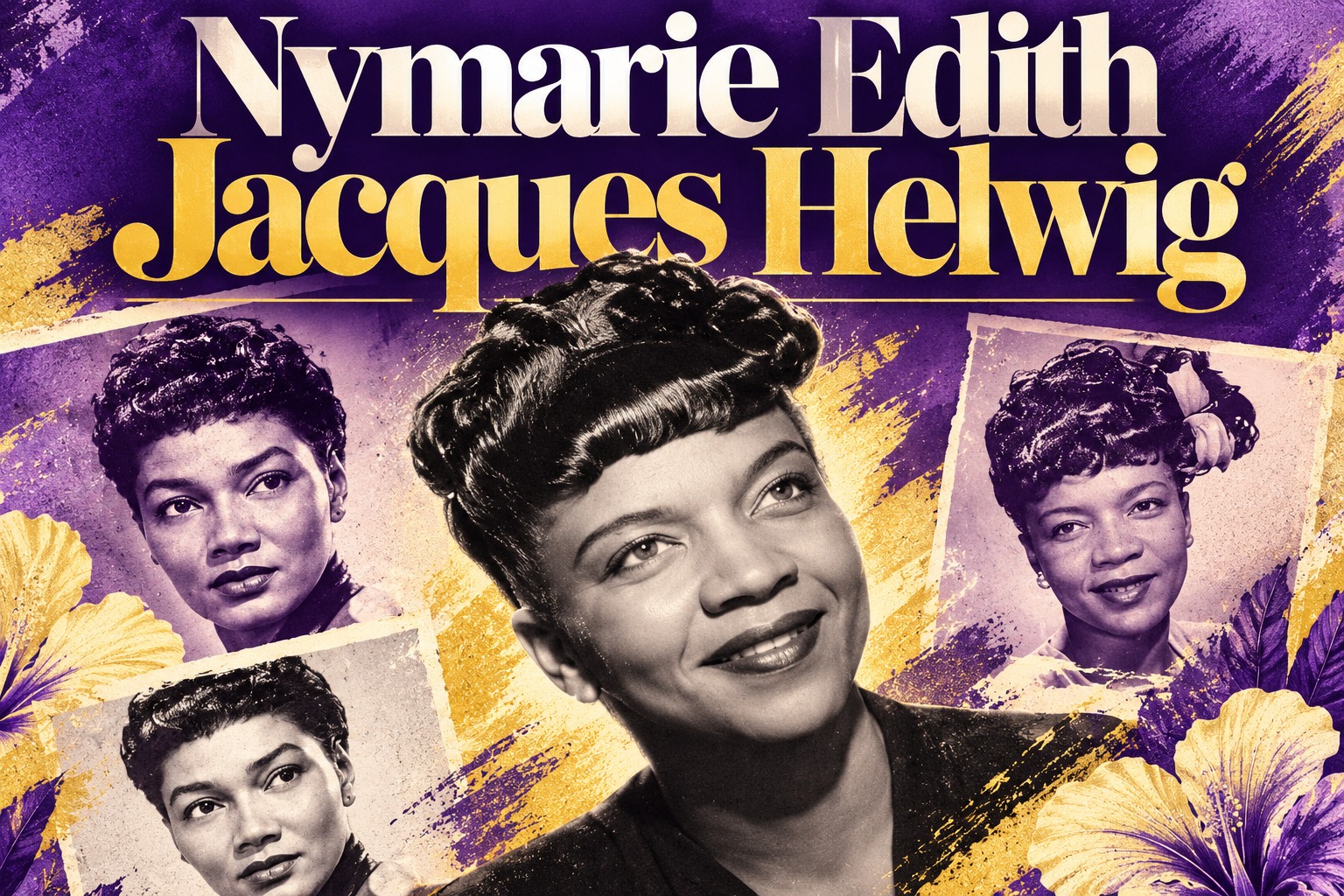
Nymarie Edith Jacques Helwig, also known as Edith Helwig Burton, was a Jamaican immigrant whose adult life centered on family and community activity in New York City. Born around 1895 to Caleb and Elizabeth Helwig, she moved to the United States around 1916. She later married Harold Charles Burton and became part of a blended household that included the future actress Rosetta LeNoire.
I see her life as a story with its own center of gravity. Rosetta’s eventual fame makes the family recognizable, but Edith’s biography begins with Jamaica, migration and marriage. Her place in the household was that of wife, mother and stepmother. The relationships matter because accounts sometimes mistakenly identify her as Rosetta’s biological mother.
Parents and Jamaican beginnings
Caleb Helwig and Elizabeth Helwig were Edith’s parents. Their names establish the earlier generation and her Jamaican origins. The known history does not provide detailed occupational histories for either parent.
Edith was born while Jamaica was part of the British West Indies. Her move to New York around 1916 placed her among Caribbean immigrants settling in the city during the early twentieth century. That setting gives her biography a geographical arc without explaining her individual reasons for leaving Jamaica.
The journey joined two parts of her family history. Her parents remained the connection to the island where she was born; her marriage and children belonged to the New York household she later helped build. I find those two locations useful anchors, especially for a woman whose own public activities were less extensively described than those of her celebrated stepdaughter.
Marriage to Harold Charles Burton
On January 11, 1919, Edith married Harold Charles Burton in Manhattan. Harold was born in Dominica in 1888 and had arrived in the United States around 1906. He worked as a plumber and electrician before becoming secretary of the New York City Board of Elections.
The marriage therefore brought together two people with Caribbean origins and lives established in New York. Harold also brought three children from his first marriage. His first wife had died of pneumonia in 1917, shortly after the birth of their son Wilmot. Edith entered a household shaped by that loss.
I regard the marriage date as the most useful boundary in the family chronology. Rosetta, Mary Alice and Wilmot were already Harold’s children before Edith became his wife. Joyce and Warren were children of Edith and Harold’s marriage. Distinguishing those groups makes the family structure clear without treating the stepchildren as less fully part of the household.
Rosetta Mary Alice and Wilmot
Rosetta Olive Burton, later Rosetta LeNoire, was born on August 8, 1911. She was Harold’s eldest child from his first marriage and Edith’s stepdaughter. By the time Edith married Harold in January 1919, Rosetta was seven. Her childhood in Harlem included a struggle with rickets and dance lessons associated with her godfather, Bill Robinson.
Mary Alice Burton, later Mary Alice Burton Francis, was born around 1915. Wilmot Burton was born around 1917, shortly before their biological mother’s death. Both grew up within the blended family after Edith and Harold married. Their names give the household a shape beyond its most famous member.
I prefer to describe these relationships directly rather than turn Rosetta’s later career into the only reason to remember the family. Edith was stepmother to three children of different ages, from a school age girl to a young boy born near the time of the family’s bereavement. That was a substantial domestic role before any television audience knew Rosetta’s name.
Joyce and Warren Burton
Edith and Harold had two children together, Joyce Burton and Warren Burton. They were raised in the Manhattan household alongside their older half siblings. Their birth dates and adult professional histories are not established in the known history, but their positions in the family are straightforward.
The household consequently joined five children through two marriages. Rosetta, Mary Alice and Wilmot shared Harold as their father with Joyce and Warren. Edith was biological mother to the younger pair and stepmother to the older three. I find this simple explanation more helpful than using the word mother loosely for everyone and losing the chronology.
The family’s presence in Harlem and Manhattan during the 1920s and 1930s is part of its known history. Those places were the setting for the children’s early years and for Harold and Edith’s married life. They also connect the household to the broader Caribbean American community of New York without requiring invented stories about particular neighbors or streets.
Household work and civic involvement
Edith’s principal work was homemaking. In a family with five children, that role belongs in the biography as work rather than as an empty space where a formal profession might have been. Harold’s employment moved from skilled trades into election administration, while Edith was also involved in local Republican organizations.
Her civic participation gives the story a second dimension beyond the home. She was connected with community political activity in Manhattan, although the known history does not identify particular offices, campaigns or awards.
For me, the household and civic details fit together naturally. Marriage and childrearing defined much of her adult life, while local organizations provided an additional setting for participation. Both belong to the New York chapter that began after her immigration from Jamaica.
Rosetta’s public career and the later years
Rosetta LeNoire became a stage and television actress associated with productions including the all Black Macbeth, The Jeffersons and Family Matters. She also advocated for broader opportunities in theatrical casting. Her public career made the Burton family history interesting to audiences who knew her principally through performance.
Edith lived through much of Rosetta’s developing stage career, but she died before the later television role as Mother Winslow became familiar. Harold died in 1971. Edith died in New York City on January 1, 1976, at approximately 81. Rosetta lived until March 17, 2002.
Those dates separate the generations. I see Edith’s life running from a Jamaican birth in the nineteenth century to a long adulthood in twentieth century Manhattan. Rosetta’s later visibility reaches beyond Edith’s lifetime, while the family relationships remain rooted in the marriage of January 1919.
FAQ
Was Nymarie Edith Jacques Helwig Rosetta LeNoire’s biological mother?
She was Rosetta’s stepmother. Rosetta was born in 1911 to Harold Charles Burton and his first wife, who died in 1917. Edith married Harold on January 11, 1919, joining the household after that loss. This chronology distinguishes her maternal role in the family from biological parentage.
Who were the children in Edith and Harold’s household?
Harold’s children from his first marriage were Rosetta, Mary Alice and Wilmot Burton. Edith and Harold later had Joyce and Warren Burton together. The household was therefore a blended family of five children, with the older three being Edith’s stepchildren and the younger two her biological children.
What did Edith do outside her family role?
She participated in local Republican organizations in Manhattan in addition to her homemaking responsibilities. The known history establishes community political involvement without naming a specific elected position or formal professional career. Her adult life was centered on New York after her immigration from Jamaica around 1916.