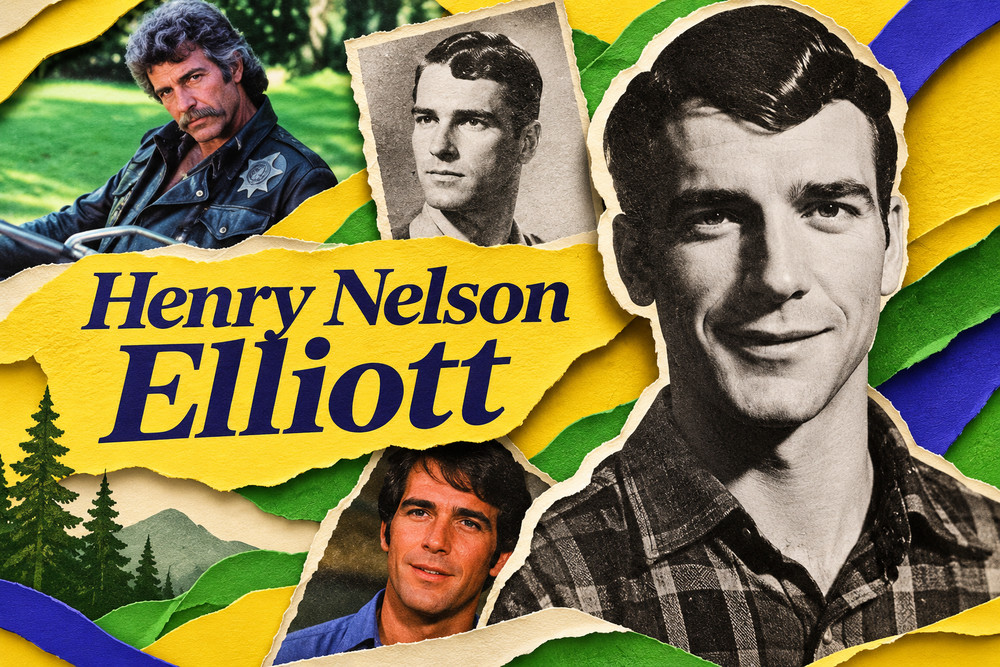
A father in the theater audience
Henry Nelson Elliott attended a couple of his son Sam’s stage performances without becoming persuaded that acting offered a dependable future. That small act complicates the familiar account of a father who opposed Hollywood. He had seen something of the work. He simply did not share his son’s confidence in where it could lead.
Sam remembered a different response beside a trout stream. There, Henry recognized his ability and took pride in it. I think the theater visits give their disagreement a particular poignancy: father and son could share an outing without arriving at the same judgment about what it meant.
Henry’s own working life followed a long federal career, ending in a regional supervisory position. His son would carry that example of sustained effort into a profession Henry considered an unlikely way to earn a living.
Fishing companions and greenhouse flowers
Sacramento supplied many of Sam’s most enduring memories of his father. Their fishing trips reached into the Sierra, with Placerville, Wentworth Springs, and the Rubicon River among the places he recalled. Henry’s friends joined that outdoor world. Sam described them as tough, hardworking men who also behaved with courtesy and kindness.
At home, Henry tended a backyard greenhouse. According to Sam, he grew prizewinning begonias, and both parents belonged to the Begonia Society. Gardening was a shared interest for Henry and Glynn, alongside the hunting, fishing, and camping that figured in their son’s account of growing up.
The begonias broaden my sense of Henry more than another description of his toughness could. Care for flowers belonged to the same life as predator control and fishing expertise. Sam characterized the family’s means as modest, with school, Saturday movies, and outdoor activities shaping childhood rather than expensive diversions.
Glynn and Glenda shaped another ambition
Saturday movie matinees with his older sister Glenda helped awaken Sam’s interest in acting. Glenda was more than a name beside her famous brother: those shared trips gave her a place in the beginnings of his ambition. She later married and became Glenda Ford. Her daughter, Denise Michele Ford, had been born before Henry died.
Glynn Mamie Sparks Elliott encouraged the acting plans that troubled her husband. Born in Barksdale, Texas, on November 25, 1915, she had an athletic background and a teaching career of her own. She taught physical education at Peter Lassen Junior High in Sacramento and later at Reynolds High School in Troutdale, Oregon.
For Sam, the contrast between his parents remained clear. His mother supported the career; his father thought the odds were overwhelmingly against it. Henry wanted a degree for his son. Sam nevertheless pursued theater, including the role of Big Jule in Guys and Dolls during his college years.
From El Paso to the Pacific states
Henry was born in El Paso on January 6, 1911. His parents are identified as Hardie Bishop Elliott and Leona Pack. His brother, Dr. Hardy Bishop Elliott, later lived in Grand Blanc, Michigan, and his sister Jean lived in San Francisco. The surname Pack also appears in Samuel Pack Elliott’s name, although the reason for that choice is not established.
Henry and Glynn apparently married in El Paso on August 20, 1938. Their early married years included Marfa, where Sam said Glenda was born. Her birth date was November 3, 1939. By August 9, 1944, when their only son was born at Sutter Memorial Hospital in Sacramento, they had moved to California.
Henry continued to remind Sam that he was the Californian among Texans. Another move followed in the late 1950s, this time to Portland for Henry’s federal work. The precise timing varies in Sam’s recollections. What followed is clearer: Sam graduated from David Douglas High School in 1962 and completed Clark College in 1965 before returning to the University of Oregon.
| Date | Event |
|---|---|
| January 6, 1911 | Henry was born in El Paso on January 6, 1911. |
| 1933 | Henry entered federal employment in 1933, aged 22, and worked for the government for roughly 33 years. |
| August 20, 1938 | Henry and Glynn apparently married in El Paso on August 20, 1938. |
| February 11, 1966 | Henry died in Portland on February 11, 1966, five weeks after turning 55. |
Thirty three years of federal employment
Henry entered federal employment in 1933, aged 22, and worked for the government for roughly 33 years. His initial assignment is uncertain. By his death, he was regional supervisor of the Interior Department’s Division of Wildlife Services.
Sam described the occupation as predator and rodent control within the U.S. Fish and Wildlife Service. Coyotes, mountain lions, and rodents were among the animals involved, and controlling predators included killing them. Henry was also a hunter, fisherman, conservationist, and member of the Izaak Walton League of America.
His final year brought an institutional change. On July 1, 1965, the Division of Predator and Rodent Control became the Division of Wildlife Services following criticism of the program’s breadth. Henry’s personal position on those reforms, and any alterations he directed in field practice, remain unknown.
Around 1965 he promoted Willard E. Nelson to Oregon state supervisor after Melvin Smith’s death. That personnel decision shows the administrative responsibility accompanying Henry’s regional title.
The Portland loss in February 1966
Henry died in Portland on February 11, 1966, five weeks after turning 55. Sam was 21. Sam remembered a sudden heart attack at home and his father dying in Glynn’s arms. His later recollections sometimes gave younger ages for both of them, but those figures do not fit their birth dates.
The funeral was held on February 14, followed by burial at River View Cemetery in Portland. Henry never saw Sam’s screen success. His son continued to credit him with the work ethic that supported that career, while expressing lasting sorrow that his father could not see its results.
FAQ
How many children did Henry Nelson Elliott have?
Henry and Glynn had two children, Glenda Elliott, later Glenda Ford, and Samuel Pack Elliott, professionally known as Sam Elliott.
How long did Glynn outlive Henry?
Glynn outlived him by 45 years. She died in Portland on November 19, 2011, aged 95.
Did Henry meet Cleo Rose Elliott?
No. Cleo, the daughter of Sam Elliott and Katharine Ross, was born in 1984, eighteen years after Henry’s death. His granddaughter Denise Michele Ford, Glenda’s daughter, was already born during his lifetime.